Wednesday, June 12, 2013

The Most Annoying Things Other Drivers Do


When it comes to driving we are perfect and everyone else is no good…right? But what is it exactly that makes each of us tick when it comes to sharing the road? An article from Cars.com explores the 10 most annoying things that drivers do. Here is a brief rundown of the list:

1. Talking on a Cell Phone – Did you know you’re just as likely to cause an accident talking on a cell phone as you are when you’ve been drinking. Of course we don’t like it when somebody else when somebody else could potentially be risking our lives just to order a pizza or chat with grandma.

2. Driving too fast for road conditions – Just because the speed limit says 60 doesn’t mean you should always be driving 60. Some people like to drive a max speeds when it’s raining…or worse…snowing. These people are not only annoying, they are putting the rest of us at risk.

3.  Not cleaning snow off cars – Only one thing can happen when someone starts driving 60 mile-per-hour with a foot of snow on their roof, it flies off! And it’s very likely that when that snow falls off it hits your car. Anyone who has had this happen to them know just how terrifying this can be.

4. Not signaling when changing lanes or leaving a signal on – Turn signals should only be used for one reason, and that’s when you’re turning. If someone forgets to turn their turn signal on it can cause massive confusion for drivers behind them. It can be just as confusing when someone tries to turn with no turn signal.

5. Leaving high beams on- This one is self-explanatory. No one likes trying to drive while staring into a bright beam of light.

6. Faulty equipment – Yes, getting things fixed can cost a lot. But when your car has so much smoke pouring out of the exhaust that other drivers can breathe or see, it’s probably time to do something about it. Not getting equipment checked or fixed may even make it so that a vehicle is not safe to drive.

7. Taking two spaces in a parking lot – Nothing says jerk more than taking up two parking spaces, especially in a crowded lot or parking garage. Apparently the paint job on their car is more important than you being able to park or not.

8. Staying in the far left lane – We all know the left lane is the passing lane. So why do people driving slower than everyone else have to ride in it for miles?

9. Not acknowledging making a mistake or overreacting to an honest mistake – We all make mistakes. And it’s a normal reaction to be mad about somebody else’s mistakes, especially when driving. But when a driver tails you for miles or screams at you out their window, flipping the bird, they just look plain crazy.

10. Dangerous loads improperly secured – This one is similar snow not being cleaned off of a moving car, but having a folding chair fly out of a car is much more dangerous than snow. Not only will it scare you and possibly cause an accident, but it could damage your car as well.

Click the link to read the full article from Cars.com: http://bit.ly/itnzFb

Wednesday, June 5, 2013

Engine Oil Myths


In order to operate smoothly, it’s essential that your engine is properly oiled.  The oil keeps the moving parts lubricated and protected from corrosion, sludge, and gunk free.  However there are many myths about engine oil and in this article, “5 Engine Oil Myths”. Here are some highlights:

·         The “W” in 10W-30 oils stands for “weight” -- the most important thing to know about oil  is viscosity  Oil is measured in single grade or multi-grade, and the oil is timed in seconds.  Example: SAE 30 means the oil takes approximately 30 seconds to flow through the tubes.

·         When engine oil turns dark, it’s dirty and should be changed – dark oil is dirty oil, which is false! Most modern oil disperses tiny particles called detergent additives. That’s why the oil appears darker. This in no way impedes the oil from performing its normal functions of lubricating and protecting the engine.

·         You should change your oil every 3,000 miles – modern detergents oils viscosities are better auto engineered to allow cars to travel 7,500 miles between oil changes.  Consumer Report has debunked this myth and driving 7,500 miles between oil changes shouldn’t harm your vehicle in any way.


You can read all 5 of the most popular engine oil myths at: http://bit.ly/Zgk046.

Wednesday, May 29, 2013

Common Car Maintenance Mistakes


A part of owning a car is coming to terms with the fact that things are going to go wrong. Parts are going to fail, bulbs will burn out, engine lights will come on, and belts will need to be replaced. Maintenance is inevitable whether you choose to do it yourself or take your car to a professional. There are a number of big mistakes do-it-your-selfers and sometimes even professional mechanics can make when “fixing” vehicle. This article (http://auto.howstuffworks.com/under-the-hood/vehicle-maintenance/10-serious-mistakes-car-maintenance.htm#page=0) tells you some of the most common mistakes to watch for. Here are some of the highlights:

·         Roaming around with burned out lights – Headlights and high beams are easy to spot when they burn out, but tail lights, brake lights, and running lights burn out too. This is one of the cheapest and easiest car maintenance tasks, so don’t put it off!

·         Attempting a jump start without really knowing how – Sending electricity to places it isn’t supposed to be can fry your car…or you! Don’t let that happen. Learn how to jump start a car before you actually have to do it.

·         Assuming bald tires will last a bit longer – Tires give a car the proper contact with road it needs to drive safely. If your tires are bald the car’s contact with the road isn’t so good anymore. Get a new set when the tires go bald, even if the tread looks decent.

·         Forgetting to torque the lug nuts – After changing or rotating wheels you need to make sure there is a proper amount of force applied to the lug nuts. If there’s not, eventually the pressure of driving will force the lug nuts off, which could cause your tire to leave your car while driving. No one wants that.

·         Forgetting to replace drained fluids – Gasoline isn’t the only important fluid in your car. Oil and transmission fluid keep your engine running smoothly. Brake fluid helps maintain proper pressure in your brakes. Coolant keeps things from getting too hot or too cold. These things are all important in keeping your car from having serious issues, so always triple-check that the fluids have been refilled after being drained.

·         Ignoring warning lights – Warning lights come on for one reason only, something isn’t functioning right. The longer you let it go, the more serious the issue can become. Even if you think it’s something simple like your gas cap not being tight enough, get those warning lights checked!

Read all ten maintenance mistakes here: http://bit.ly/18YoBa2.

Thursday, May 23, 2013

How to Keep Your Car From Overheating

Use these easy maintenance tips this summer to avoid breaking down from your car overheating.


This summer is one of the hottest in recent memory, and is already creating a flurry of awful news stories about people leaving their dogs and even their children in hot cars to overheat, and even die.

While we hope readers are using common sense about dogs and children, we know that car care in extreme heat is not always obvious, even when you consult that phone book in your glove box known as the owner's manual.

So here are some basic things you should know about caring for your car and avoiding unnecessary catastrophes or 
repairs.

1. If you battery is three years old, consider replacing it as a matter of preventive maintenance. Batteries get stressed in extreme temperatures, and the older they get, the more stressed they get.

2. Have your cooling service checked by a 
mechanic or the dealer if it has not been looked at in two years. This system is critical to keeping the engine cool and the air conditioning system working right. Let it break for lack of simple maintenance, and it is not cheap to fix or replace.

3. If you are driving, and especially if you are stuck in 
traffic, and the temperature light goes on and you are in the danger zone, turn off the air conditioner immediately and open the windows. If the light stays on, turn the temperature selector on the system to the hottest setting. This will redirect some of the heat that is trapped in the cooling system. If the light stays on, pull over and call road-side assistance. Stop driving. If the light goes off, you should be okay to drive the car to a mechanic.

4. Make sure you have fresh coolant in your radiator to start the summer, not just water. Have the radiator checked specifically for corrosion.

5. Look at your 
tires. If you have worn or cracked tires, you are asking for big trouble in very hot weather. Not only could you blow the tires, but a blow-out at high speeds could cause you to crash, rollover and possibly hit another vehicle.

6. If you drive long stretches of road on a summer road trip or business trip, keep a gallon jug of water somewhere in the car. It could come in handy if you have a radiator 
leak, or you get stuck waiting for help.

Article courtesy of http://aol.it/YZGLnz.

Thursday, May 16, 2013

Did You Know?: Interesting Car Trivia


It goes without saying: we love cars. How can we not? Cars are beautiful high-tech wonders. And just as fascinating to us as the cars we drive today is the history behind the cars themselves, especially because buried in the automobile’s past are tons of fun facts.

For example, did you know:

      Before automobiles were widely used, the New York City Police Department used bicycles to pursue speeding motorists in 1898.
      The first speeding ticket was issued in 1902.
      The first Ford cars had Dodge engines.
      The first gas gauge only appeared in cars in 1922.
      Most American car horns beep in the key of F.

And that’s just the first five car facts we could think of! Get even more fun car facts by clicking here.

Thursday, May 9, 2013

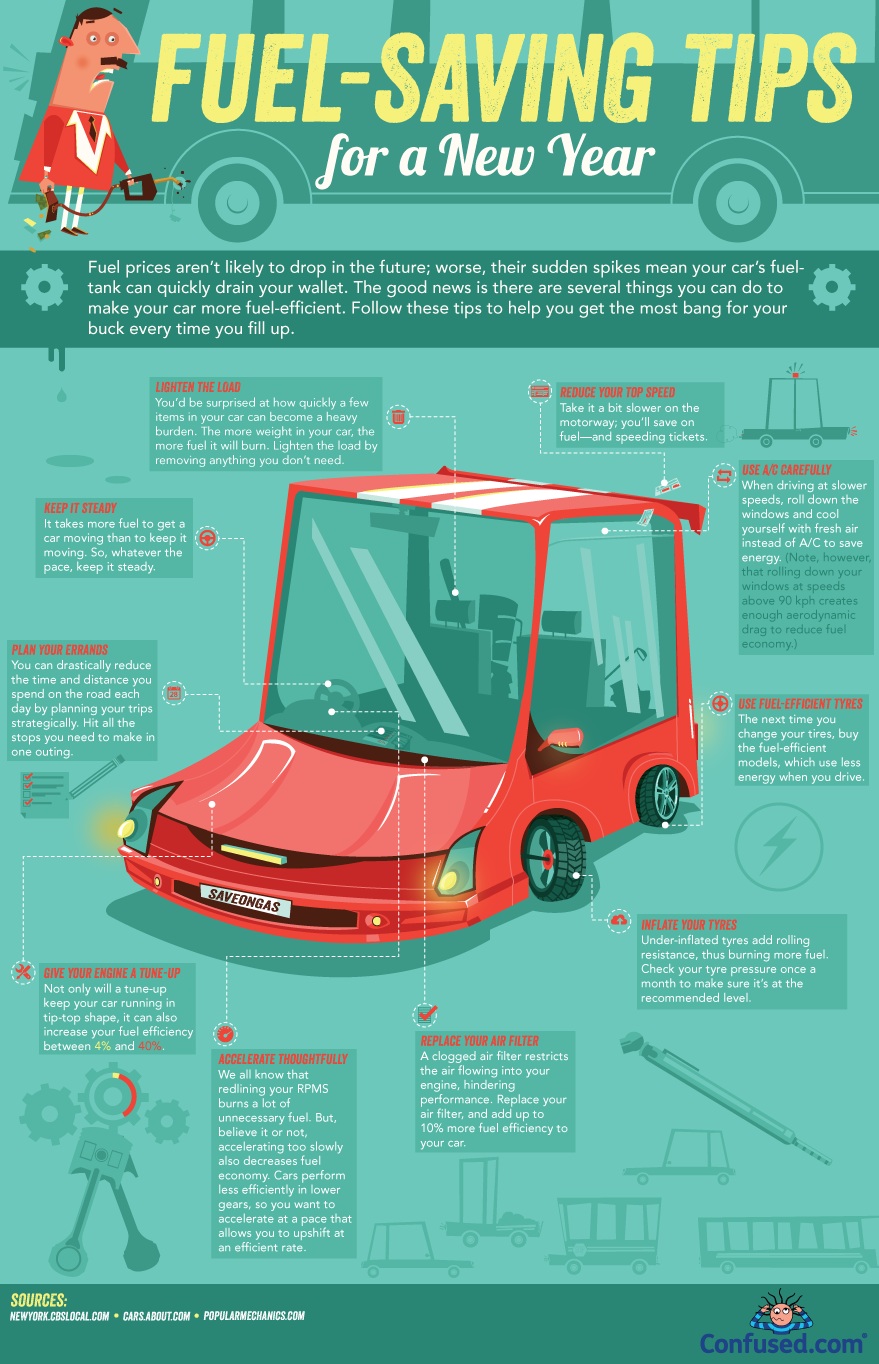
Fuel Saving Tips: An Infographic


Fuel prices are one of the things that can make what should be a fun drive in your car seem like a costly annoyance. Everyone wants to get their money’s worth from their fuel tank, as they should. The problem, though, is that there’s a lot of conflicting information floating around out there about how exactly you save fuel!

Have no fear, readers: to help you we’ve found a great infographic with tips on how to save fuel. It may say “tips for a new year,” but come on: it’s never the wrong time of year to get tips when it comes to car care! Click the image to view a larger version.


Thursday, May 2, 2013

Top 10 Weirdest Things Found In Rented Cars


Ever forgotten something in that car you rented while you were on vacation? Don’t worry: even the best of us manage to leave our sunglasses or car keys behind occasionally.

But sometimes even stranger items get left behind in cars. What do we mean by strange? Well...take a look at this infographic and you’ll see what we mean! Make sure you read all the way to the end - this has some great tips on how to make sure you don’t leave anything behind in your rental.


Twitter Delicious Facebook Digg Stumbleupon Favorites More